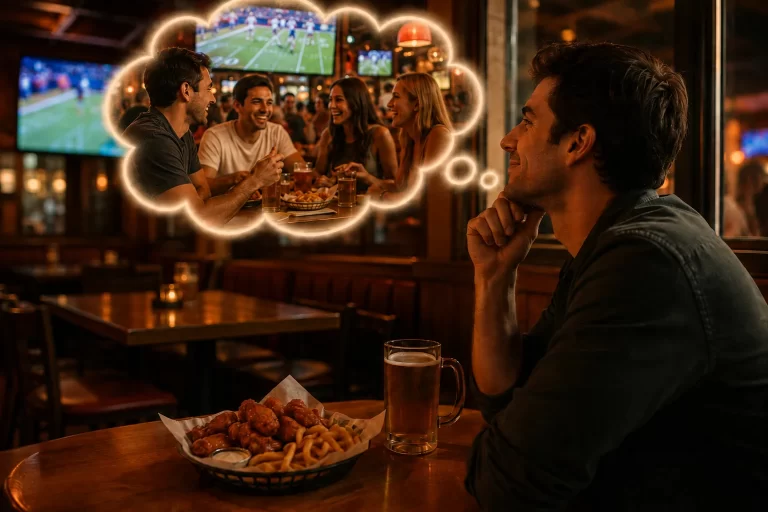
Traditions around a table begin when an enjoyable experience starts to repeat itself. Sharing food, conversations, or sporting events in the same place creates familiarity and shared memories. Over time, an occasional get-together can become a tradition that helps keep friends and families connected.
Some gatherings begin with no intention of becoming a tradition. A group of friends agrees to meet up to watch a game, coworkers decide to grab dinner after work, or someone suggests returning to the same restaurant where everyone had a great time before. The experience works, it happens again a few weeks later, and almost without anyone noticing, a tradition begins to form.
Before long, no one needs to ask where the next gathering will be. The place simply becomes part of the plan.
That is how many traditions among friends and families begin. They do not necessarily come from major celebrations or require dates marked on a calendar. More often, they start with something much simpler: a table, a shared experience, and the desire to enjoy it again.
For a restaurant, this helps explain why returning to the same place can have a different kind of value than constantly discovering somewhere new. Going back allows people to build new experiences in the same setting until that space becomes connected to the group’s own stories.
In short, traditions around a table begin when an enjoyable experience starts happening again and again. Sharing food, conversations, sports, or celebrations in the same place creates familiarity and shared memories that can eventually turn an occasional outing into a tradition among friends or family.
Traditions Do Not Always Begin as Traditions
When we think about traditions, we usually imagine something that has been happening for years. A family dinner on a certain date, a recipe passed down from one generation to another, or a celebration everyone knows by heart. But before any of those became traditions, there was a first time.
The same thing happens with gatherings among friends. Maybe it started because there was a game no one wanted to watch alone. Someone suggested a place, the group agreed, and the night turned out better than expected. When the next important game came around, repeating the plan seemed easier than starting the search all over again.
By the third time, the group already had a shared point of reference. Everyone knew where to meet, understood the atmosphere, and probably had a few favorite dishes. After several visits, what originally began as a practical decision started to mean something more.
That process shows that traditions do not need to be intentionally designed. They simply need experiences worth repeating.
When a moment works, people naturally want to recreate it. Not because they expect exactly the same thing to happen again, but because the setting makes it easier for new stories to unfold.
Why Does a Table Make It So Easy to Create Memories?
Food has served as a gathering point for almost as long as human communities have existed. Sharing a meal does more than satisfy a basic need; it creates a space where people stay together long enough to talk, listen, and take part in a shared experience.
In a restaurant, the table serves exactly that purpose. For a while, we stop moving from one place to another and focus our attention on the people around us. Food arrives, conversations shift from one topic to another, and time begins to move at a different pace from everyday life.
That is why so many important memories are connected to meals. Birthdays, reunions, celebrations, goodbyes, and even conversations that seemed insignificant at the time often happen while people are sharing something around a table.
What is interesting is that we do not need a special occasion for this to happen. A weekday gathering can become just as memorable as a celebration planned months in advance. What determines its importance is not the date, but the people and what happens while they are together.
When those experiences begin repeating in the same place, our memories gradually connect that space with the group.
Friends Create Their Own Rituals Too
Families often have clearly defined traditions, but groups of friends develop their own rituals in a much more spontaneous way. It might be Thursday night dinner, getting together after a certain game, celebrating birthdays at the same place, or having a favorite table where the group somehow always ends up sitting.
These small rituals serve an important purpose because they make something that can become difficult in adult life much easier: finding time to see one another.
As work, family, and personal responsibilities grow, organizing a gathering can become an exercise in coordination. When a tradition already exists, part of that effort disappears. The group knows the place, knows what to expect, and already has a reason to get together again.
That is why returning to the same place does not have to feel repetitive. The setting may stay the same, but the conversations, the games, the people who join, and the stories being told are different every time.
Tradition provides continuity. The people are what make every gathering different.
Sports Can Become the Calendar of a Friendship
For many groups, sports seasons create a natural calendar for getting together. The NFL, soccer, NBA, MLB, and other competitions provide dates fans look forward to for weeks and can easily become a reason to meet up.
Watching sports as a group also adds an emotional dimension that is difficult to recreate in other ways. Everyone watches the same moment, but each person experiences it differently. One play can start a debate, a score can trigger a group celebration, and an unexpected result can become a topic of conversation for days.
When that ritual repeats, the memory is no longer connected only to the sporting event. It also becomes tied to the people who were there and the place where it happened.
That is how a tradition can begin as simply as meeting for certain games or become as specific as sitting at the same table for the biggest matchups of the season.
What started as a shared interest in sports eventually becomes a way of keeping the group connected.
What Makes Returning to the Same Restaurant Special?
Going back to a restaurant you already know creates a different experience from visiting somewhere for the first time. The novelty may decrease, but something equally valuable takes its place: familiarity.
You know what kind of atmosphere to expect, recognize part of the menu, and can spend less time evaluating the place and more time enjoying the people you are with. That reduction in uncertainty makes organizing a gathering much easier.
Returning also allows new memories to build on older ones. A certain table may remind you of last year’s birthday; a particular game may bring back the night when the entire restaurant celebrated at the same time; a favorite dish may remind you of the first gathering of a group that later continued to grow.
That is why going back does not simply mean repeating something.
It means continuing a story.
Places we return to become reference points within our relationships. As experiences accumulate, the restaurant stops being just the place where those memories happened and begins to become part of the memories themselves.
Hooters and the Traditions Built Among Friends
The Hooters experience includes several elements that naturally support recurring gatherings. The combination of American-style food, sports, and a social atmosphere gives different groups plenty of reasons to come together around a table.
For some, the tradition may begin with wings and a game. For others, it may start with an after-work gathering that becomes a regular plan. There are also groups that turn certain sporting events into dates reserved specifically for getting together again.
At Hooters Cancun, the goal is not for every visit to be identical. What makes returning interesting is that the setting can feel familiar while every gathering creates a different story.
The menu, screens, and atmosphere provide the meeting place. The people are the ones who create the tradition.
This is also one of the reasons a community around a restaurant is not built only by attracting new guests. It grows when people who already know the place continue finding reasons to return and naturally begin incorporating it into their own plans.
The Tradition Can Continue Even When the Gathering Is at Home
Having a regular meeting place does not mean every gathering has to happen inside the restaurant. Some weeks, schedules do not line up, someone may prefer to host the game at home, or the group may simply want to get together without going out.
The tradition can adapt.
For those occasions, Hooters Malecón offers delivery in Cancun, making it possible to bring some of the flavors associated with those gatherings into a plan at home.
You can review the service and available options on the Hooters Cancun Delivery page.
Because availability depends on location, it is best to confirm that the gathering place is within the delivery area before placing an order. You can do this directly through WhatsApp at +52 998 151 4645 and ask specifically whether delivery is available to your location.
That way, if the group’s ritual is getting together to watch a game, the tradition does not have to stop just because the meeting place changes for a week. Sometimes everyone will gather around a table at Hooters, and other times around the TV at home.
What matters is still the same thing that started the tradition in the first place: getting together.
The Best Traditions Are the Ones We Still Enjoy
A tradition loses its meaning when it becomes nothing more than an obligation. The traditions that truly last are the ones people look forward to because they represent another opportunity to spend time together.
That is why it does not matter very much whether they began ten years ago or three weeks ago. They do not need complicated rules either. All they need is a moment the group considers valuable enough to want to repeat.
Dinner after work can become a monthly gathering. One game can start a tradition that lasts an entire season. A restaurant chosen by chance can eventually become the place where everyone knows they will meet again.
In the end, traditions around a table are not created by what is sitting on top of it, but by everything that happens around it.
The conversations that continue.
The games everyone remembers.
The people who come back.
And the stories that continue adding up every time someone asks:
“Are we meeting at our usual place?”
Frequently Asked Questions
What makes returning to the same restaurant special?
Returning to the same restaurant combines trust and familiarity with the opportunity to create new experiences. Because the group already knows the place and what to expect, everyone can spend less time making decisions and more time talking, connecting, and enjoying the moment. Over time, every visit adds new memories to the ones already created.
How do traditions among friends begin?
Many traditions begin when an enjoyable experience is repeated. Dinner after work, getting together to watch certain games, or regularly visiting the same restaurant can become a tradition when the group enjoys spending time together and continues finding reasons to return.
Why do some restaurants become “the usual place”?
Some restaurants become “the usual place” because they provide an experience consistent enough to build trust while allowing every visit to create different memories. When a restaurant becomes associated with important people and meaningful moments, it stops being just somewhere to eat and becomes a regular meeting place.
What makes Hooters special for groups that meet regularly?
The combination of American-style food, sports, and a social atmosphere makes Hooters a natural meeting place for different occasions, including games, after-work gatherings, and time with friends. Repeated experiences can eventually turn those visits into traditions that are unique to each group.
Does Hooters Malecón offer delivery for gatherings at home?
Yes. Hooters Malecón offers delivery in Cancun. You can review the available options through the Hooters Cancun Delivery page. Because delivery coverage depends on location, it is recommended to contact Hooters through WhatsApp at +52 998 151 4645 to confirm whether service is available to the place where you plan to meet.
How can I order Hooters delivery in Cancun?
You can start on the Hooters Cancun Delivery page or contact Hooters directly through WhatsApp at +52 998 151 4645 to request the available menu and first confirm delivery coverage for your location.